


Professor Nasreen Ali | Co-Investigator

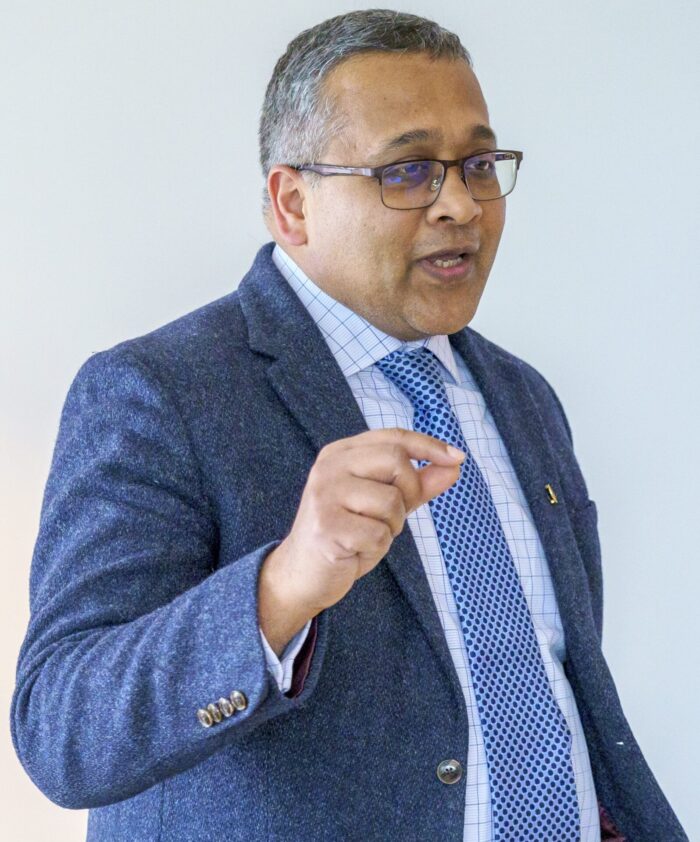
This is an image of Nasreen Ali

Professor Nasreen Ali | Co-Investigator

University of Bedfordshire

This is an image of Nasreen Ali

Nasreen Ali is a professor of Public Health Equality and Course Lead for the MSc Public Health at the University of Bedfordshire. Nasreen’s research aims to improve the health and social care outcomes for marginalised and disadvantaged communities across the life-course by influencing policy, design and delivery of inclusive and responsive services, locally, nationally and internationally.

Dr Priyasha Saksena | Co-Investigator

This is an image of Priyasha Saksena

Dr Priyasha Saksena | Co-Investigator

University of Leeds

This is an image of Priyasha Saksena

Priyasha Saksena a legal historian whose research focuses on the historical development of legal concepts and institutions within the British Empire. Priyasha is particularly interested in the relationship between international law and colonialism, and her doctoral dissertation was a history of the doctrine of sovereignty in colonial South Asia. She joined the School of Law in March 2019 and prior to that was a visiting researcher at the Max Planck Institute for European Legal History.


Professor Marie-Andrée Jacob | Principal Investigator

This is an image of Marie-Andrée Jacob

Professor Marie-Andrée Jacob | Principal Investigator

University of Leeds

This is an image of Marie-Andrée Jacob

Marie-Andrée Jacob is a professor of law at the University of Leeds. Marie’s work focuses on relationships between knowledge claims from medicine, law and the state. She has written on consent, kinship, healthcare law, research ethics and integrity, medical regulation, and on how activities sit on the border between legality and illegality. Her ethnography of an organ transplantation bureau, Matching Organs with Donors, was published by the University of Pennsylvania Press in 2012. She has acted as general editor for The Sociological Review (2017-22) and has co-edited with Anna Kirkland the international Research Handbook on Socio-Legal Studies of Medicine and Health (2020), the first resource of its kind bringing together scholars working on law, society and medicine from different jurisdictions and career stages.

Collaborators

Collaborators

The team will be supported by the following collaborators:

This image is an icon of ReSTORE

ReSTORE—which stands for Refugee Support, Training, Orientation, Recruitment, and Education—is a nurse-led programme based in South Yorkshire, established in 2023. It supports refugees and midwives who previously worked as nurses and midwives in their home countries, helping them return to their professions by entering NHS workforce and register with the Nursing and Midwifery Council (NMC). The programme provides pastoral support, career guidance, and specialised training for the Occupational English Test (OET), Computer-Based Test (CBT), and Objective Structured Clinical Examination (OSCE).

Hosted by the South Yorkshire Primary Care Workforce & Training Hub, ReSTORE is built upon strong collaborations with local authorities, the DWP, NHS trusts, charities, and academic institutions, including Sheffield’s two universities. It aligns with NMC’s processes to ensure comprehensive support for participants.

Since its establishment, ReSTORE has supported nearly 40 refugee nurses and midwives, with 11 successfully passing their required exams and securing roles as registered nurses in NHS hospitals across South Yorkshire. This project has played an important role in supporting the integration of individuals who have faced significant challenges. The contributions of these nurses and midwives to the NHS are substantial, not only enhancing the diversity of the workforce but also leading to improved patient care across the region. Moreover, their integration into the healthcare system helps to strengthen the local economy.

This is an icon of RefuAid

RefuAid, a charity that provides people who have fled their homes with tailored support to build independent and dignified lives in the UK. RefuAid focuses on three key barriers to access for refugees with leave to remain, trying to restart their life in the UK: finance and re-qualification, language tuition and specialist employment advice. The charity’s solutions have proved both sustainable and successful. The following are RefuAid’s non-negotiable values: remaining independent, neutral and impartial; unity; locality; listening; and long-term thinking.

Refugee and Asylum Seekers Centre for Healthcare Professionals Education (REACHE) Northwest, an organisation set up to assist Refugee and asylum seeking Healthcare Professionals (RHPs) to register their qualifications in the UK. REACHE also assists RHPs who have permission to work in finding professional employment in the UK National Health Service (NHS). REACHE works with local and national organisations in the NHS, higher education and refugee support.

This is an image of Refugee Council icon

Refugee Council, a leading charity working with refugees and people seeking asylum in the UK. Founded in 1951, following the creation of the UN Refugee Convention, Refugee Council exists to support and empower people who have fled conflict, violence and persecution in order to rebuild their lives here in the UK. The organisation works with over 13,000 women, men and children each year who are desperately seeking safety.

This is an image of PATH Yorkshire icon

PATH Yorkshire, a not-for-profit community organisation with over 30 years of training, work coaching, mentoring and enhancing career opportunities to economically and socially disadvantaged communities. PATH Yorkshire seeks to widen the participation of under-represented and ‘hard to reach’ minority ethnic groups in their community. The organisation’s values include creating better chances, better opportunities and better futures.

This image is Leeds Playhouse icon

Leeds Playhouse are committed to being a place of safety, hospitality and support for refugees and People Seeking Asylum. The Playhouse works closely with refugee organisations and with volunteers from refugees and People Seeking Asylum in Leeds to offer a range of creative and practical projects.

This image is the Carbon:imagineering icon

Carbon:imagineering, a boutique digital innovation and R&D practice. Carbon’s mission is to discover the elemental building blocks of the near future and fashion them into new experiences for its partners and clients by scouting for emerging technologies; nurturing relationships with their creators; speculating on their political, economic and cultural impact; and by devising novel software products and services. Carbon was co-founded by Imran Ali, who most recently was featured in “Tech In Leeds”, a documentary charting Leeds’ impact on the digital industry.

This image is the Lincolnshire Refugee Doctor Project icon

Lincolnshire Refugee Doctor Project (LRDP) aims to create the best possible scheme across Lincolnshire, North East Lincolnshire and North Lincolnshire by supporting refugees who are medically qualified in their home Country to achieve GMC registration, which will enable them to continue their careers in the UK and support the local NHS workforce. LRDP also supports programme members to settle well in the local community by providing support with finding suitable local accommodation, and securing part-time employment and/or clinical placements with local NHS Trusts to enable positive learning experiences.

This is the image of The Phoenix Project icon

The Phoenix Project (TPP), a charity that supports Displaced Doctors regain their professional identity and prospects, through the provision of medical English language teaching sessions for GMC licensing examinations (OET and PLAB-2), whilst simultaneously providing the NHS with highly qualified and talented professionals. TPP also provides part-sponsorship for examination costs and help navigating NHS medical careers.

Migrant doctors and nurses in the UK

Migrant doctors and nurses in the UK

This image is the logo of UKRI Aerts and Humanities Research Council

The AHRC Standard Grant Making it to the Registers: Documenting Migrant Carers’ Experiences of Registration and Fitness to Practise project (2023-2026) uses archives and qualitative interviews to explore how professional regulation impacts the creation and maintenance of the UK healthcare workforce. It aims to better understand the historical and contemporary experiences of migrant healthcare workers with

Main Findings

Making it to the Registers: Documenting Migrant Carers’ Experiences of Registration and Fitness to Practise aims to better understand the experiences of migrant healthcare workers with professional regulation.

Our research revealed many current challenges faced by immigrant and refugee healthcare workers experience when they move to the UK.

These include:  

  • Collecting the extensive paperwork required to obtain registration with the relevant statutory regulator; these problems are exacerbated for individuals who have fled violence or persecution and may have lost their documents and certificates or whose documents and certificates may have been destroyed during conflict;
  • Facing differentiated documentary requirements depending on country of training, with healthcare professionals trained in the European Union required to meet slightly less onerous requirements, thereby often resulting in more challenging experiences for healthcare professionals from the global south; 
  • Passing a series of expensive English language, clinical knowledge, and skills examinations to be able to register with the relevant statutory regulator; 
  • Ensuring that the examinations are passed in a specific order and within a particular time period (so, for instance, there is no leeway provided for pregnancy, meaning that access to registration is impacted by gender);  
  • Meeting immigration requirements that often limit who can work and for how long, leading to long periods of time during which migrant healthcare workers are unable to work and may result in de-skilling;  
  • Facing the non-recognition or under-recognition of the training, qualifications, experience, and skills they have accumulated overseas, and experiencing the resulting devaluation of their professional identity, even as their labour is needed to run the healthcare system; and 
  • Enduring individual and systemic forms of racism during the registration process and in the workplace.

External materials related to the Making it to the Registers project can be found below.

Organisations

External publications

Spotlight on Making it to the Registers

Spotlight on Research: Making it to the Registers – YouTube

Academic Outputs

  • Jacob, Marie-Andrée and Saksena, Priyasha (2023) The Changing Natures of the Medical Register: Doctors, Precarity, and Crisis. Social & Legal Studies 32(5), 714-736. Link to the article
  • Jacob, Marie-Andrée (2023) The Regulation of Apology In Healthcare: Learning from GMC V Dr Pandian 2023. Sushruta Journal of Health Policy & Opinion 15(3), 24-32. Link to the article
  • Jacob, Marie-Andrée, Saksena, Priyasha, and Limbu, Amrita (2023) Registration of Overseas-trained Healthcare Professionals in the UK. Sushruta Journal of Health Policy & Opinion 15(3), 21-22. Link to the article

Policy Outputs

  • Lorem ipsum dolor sit amet, consectetur adipiscing elit. Ut elit tellus, luctus nec ullamcorper mattis, pulvinar dapibus leo.

Creative Outputs

An Exhibition of Meaningful Objects

An Exhibition of Meaningful Objects Lorem ipsum dolor sit amet, consectetur adipiscing elit. Ut elit tellus, luctus nec ullamcorper mattis,

Read More
This is an image of the creative output from an event, works as a part of the creative output archive.

Theatre performance

Theatre performance https://www.youtube.com/watch?v=XHOmBV4js_E Audience reactions

Read More

Film

Film https://www.youtube.com/watch?v=XHOmBV4js_ELorem ipsum dolor sit amet, consectetur adipiscing elit. Ut elit tellus, luctus nec ullamcorper mattis, pulvinar dapibus leo.https://www.youtube.com/watch?v=XHOmBV4js_ELorem ipsum

Read More

Graphic novel

Read More

Blogs

News

Events

Medical registration and research conduct in the UK

Medical registration and research conduct in the UK Coming Soon...
01 Feb 2026
Medical registration in colonial India Coming Soon...
01 Feb 2026
PAs and registration in the UK Coming Soon...
01 Feb 2026
An Exhibition of Meaningful Objects Lorem ipsum dolor sit amet, consectetur adipiscing elit. Ut elit tellus, luctus nec ullamcorper mattis,...
31 Jan 2026
Melissa Nolas - Lorem ipsum dolor sit amet, consectetur adipiscing elit. Ut elit tellus, luctus nec ullamcorper mattis, pulvinar dapibus...
31 Jan 2026

Partners

Advisory Board

Advisory Board Composition The team will be supported by an advisory group:Dr Ramesh Mehta, British Association of Physicians of Indian...

Read More

Collaborators

Collaborators The team will be supported by the following collaborators: ReSTORE—which stands for Refugee Support, Training, Orientation, Recruitment, and Education—is...

Read More

Partner Organization
Partner Organisations The British Association of Physicians of Indian Origin (BAPIO) was founded in 1996 with the initial aim of...

Read More

Partner Organization
Partner Organisations

This is the logo of British Association of Physicians of Indian Origin (BAPIO)

The British Association of Physicians of Indian Origin (BAPIO) was founded in 1996 with the initial aim of supporting international medical graduates. BAPIO has grown in stature and influence to become one of the largest organisations of its type in the country.

BAPIO collaborates with all the UK Healthcare stakeholders to monitor, highlight and address the difficulties faced by doctors and ensure positive systems are in place to support healthcare workers. The organisation engages in charitable activities focused on supporting disaster events globally, and has carried out many campaigns against discrimination in education, training, and career progression.

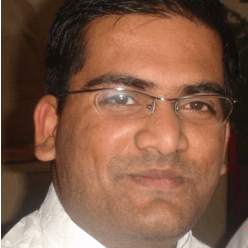
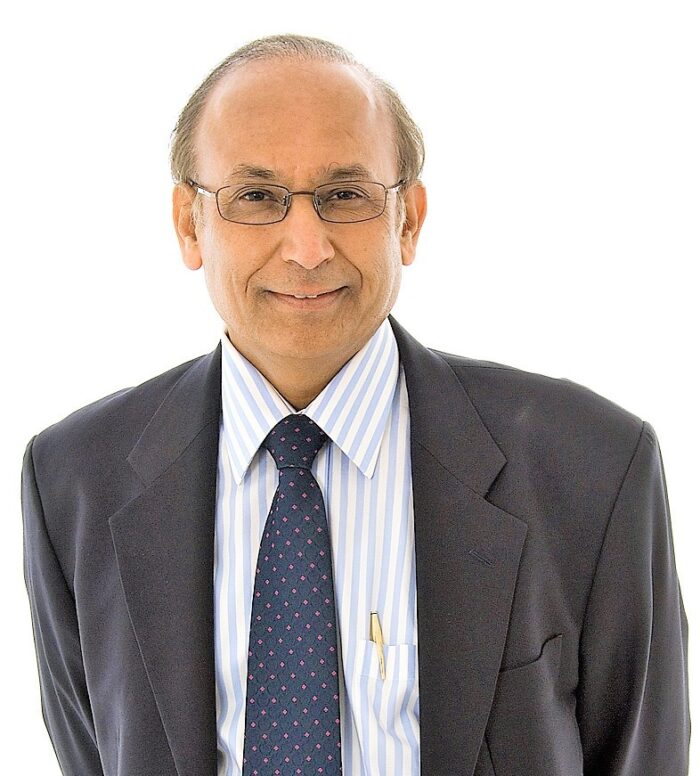
This is an image of Dr Ramesh Mehta
Dr Ramesh Mehta
Dr Ramesh Mehta CBE, MD, FRCP, FRCPCH, FHEA, DCH | President of BAPIO
British Association of Physicians of Indian Origin (BAPIO)

Dr Ramesh Mehta has worked in the NHS for 36 years and retired as a Consultant Paediatrician from Bedford Hospital in 2017. He is a former Hon. Consultant in Paediatric Rheumatology at Great Ormond Street Hospital, London. He has been a postgraduate clinical tutor for Cambridge Deanery; a principal regional examiner for the Royal College of Paediatrics and Child Health; a PLAB examiner for the General Medical Council; an Undergraduate Speciality Tutor for Cambridge University and University College London. He was an instructor for Advanced Paediatric Life Support training.

Dr Mehta has been a national and overseas examiner for MRCPCH. He has been an elected member of the council of the Royal College of Paediatrics and Child Health (2004-09) and Vice-Chair MRCPCH Part 2 Board. He chaired the Paediatric development group, Eastern Region. He was the Strategic lead for South Asia for the RCPCH (2014-2020). He is a fellow of the Higher Education Academy, UK (FHEA). He was HSJ’s top 50 BME leaders in the NHS for 3 years in 2013, 2014 and 2021. He was also HSJ’s top 100 clinical Leaders in the NHS in 2014. He has been awarded the Honorary Fellowship of the Royal College of Paediatrics and Child Health.

He was recognised in Queen’s Birthday Honours List in 2017 with an appointment as the officer of the Order of British Empire (OBE) for services to the NHS. In the King’s New Year Honours list 2023, Dr Mehta has been awarded Commander of the Order of British Empire (CBE) for services to Diversity, Equality and Inclusion. Dr Mehta is the founder and president of the British Association of Physicians of
Indian Origin (BAPIO). It has now become the biggest and most influential organisation of Ethnic Minority doctors in the UK. He is the Past President of the Global Association of Physicians of Indian Origin (GAPIO) representing an estimated 1.4 million Indian doctors practising worldwide.

This is an image of Dr Indranil Chakravorty
Dr Indranil Chakravorty
Dr Indranil Chakravorty MBBS, PhD, FRCP | Chair of BAPIO Institute for Health Research
British Association of Physicians of Indian Origin (BAPIO)

Dr Indranil Chakravorty is a Consultant in Acute & Respiratory Medicine at St George’s University Hospital, London and Director of Medical Education. He is a Senior Lecturer at St George’s University of London and School of Postgraduate Medicine at University of Hertfordshire.

He has a strong passion for medical education and expertise in quality assurance, governance and strategic leadership. He was the regional training program director for core medical training in South West London (2010-2015), followed by his role as the Deputy Postgraduate Dean in North London for Health Education England (2012-20). He has been a member of the question writing group for MRCPUK and chair of UK and International MRCP PACES examinations for the Royal College of Physicians of London. He was awarded the Royal College of Physicians London – President’s medal in 2019, for promoting excellence and quality assurance of medical education. He has conducted peer reviews of postgraduate education (HEE, London) and Faculty of Medicine at University of West Indies, Trinidad & Tobago (2018).

He has research interests, publications and international lectures in the following areas:

  • Health economics, diffusion of innovations and health services research (Doctor of Philosophy, University of Warwick);
  • Respiratory diseases – he has designed, raised funding and conducted research in sleep disorders, respiratory infections, asthma, COPD, mucociliary clearance (East & North Herts NHS Trust/ University of Hertfordshire 2005-10);
  • Medical education including technology enhanced learning (Heath Education England & St George’s University of London); and
  • Promoting patient safety and reducing harm by team building, tackling undermining and differential outcomes in the NHS (HEE, North London).

Dr Chakravorty is a keen photographer, a proponent of Indian music, a playwright and director of Shakespearean plays. He has organised national conferences as Convenor for BAPIO (2019) and Medical College Ex-students’ Association, UK (2015-16). He has a passion for writing and has developed the online journals for BAPIO as one of the Editors-in-Chief of Sushruta Journal of Health Policy & Opinions and The Physician.

Dr Chakravorty qualified (MBBS) as a doctor from the Kolkata Medical College, University of Kolkata, India in 1992 and moved to UK in 1994.

This is an image of Dr Sunil Kumar Daga
Dr Sunil Kumar Daga
Dr Sunil Daga MBBS, MRCP, PhD | Secretary of BAPIO Institute for Health Research
British Association of Physicians of Indian Origin (BAPIO)

Dr Sunil Kumar Daga holds the position of Consultant Nephrologist and Transplant Physician at St James’s University Hospital, which is part of the Leeds Teaching Hospitals NHS Trust. Additionally, he serves as an Honorary Senior Lecturer at the University of Leeds and is a deputy lead for renal theme at NIHR MIC (Leeds). He is academic lead for foundation doctors in training at Yorkshire and Humber HEE and look after trainees at Medical schools across Sheffield, Leeds and Hull/York. Recently, he completed Health Equity Fellowship at West Yorkshire and taken over lead for chronic kidney disease at West Yorkshire ICB.

Dr Daga’s involvement extends to being an honorary scientific advisor for Kidney Research Yorkshire charity and an honorary medical advisor for South Asian Health Action charity. He is also a member for Clinical study group- Transplantation and UKODTRN. He is a scientific advisor and founding member of BAPIO Institute of Health Research (BIHR).

Dr Daga’s research focuses on reducing health inequalities  and uses range of methodology to achieve this from data analytics and machine learning techniques to develop predictive models, qualitative research and laboratory techniques. He is particularly interested in studying the impact of ethnicity on medical outcomes and exploring innovative diagnostic tools for assessing antibodies in organ transplant procedures. As of 2023, his h-index, a measure of research impact, is 13 with over 960 citations.

Dr Daga has actively participated in various initiatives related to living kidney donation. He was a member of the Living Transplant Initiative and played a co-leading role in community projects aimed at improving living kidney donation among South Asians. Furthermore, he has made significant contributions to the parliamentary committee for organ donation and has been involved in devising strategies to increase organ donation rates in Black, Asian, and Minority Ethnic (BAME) communities. Dr Daga has also supervised a master’s project, conducted in collaboration with NHS Digital and the University of Manchester, which explored the influence of ethnicity on outcomes for living kidney donors in the UK. Currently, he is collaborating with the Centre for Decision Research at the Leeds Institute of Health Sciences to investigate decision-making processes regarding living kidney donation among ethnic minority patients.

In addition to his work in the field of transplantation, Dr Daga is co-supervising a project on mathematical modeling at the School of Engineering, University of Warwick. This project focuses on studying outcomes after antibody incompatible kidney transplantation. He also has a keen interest in applying novel diagnostic tools to assess the risk stratification for antibody incompatible kidney transplantation.

As a principal and sub-investigator at Leeds Teaching Hospitals NHS Trust, Dr. Daga actively supports clinical trials within the National Institute for Health Research (NIHR) portfolio, as well as commercial clinical trials.