2023 saw more doctors with overseas primary medical qualifications join the UK workforce than those graduating from the UK medical schools.[i] While international professionals have been integral to the National Health Service (NHS) since its establishment over 75 years ago, this marks the first time that they outnumber the UK-trained graduates. In this blog, I provide an overview of how this growing number of overseas-trained healthcare professionals experience a key regulatory mechanism to protect the public – fitness to practise.
Fitness to practise refers to the process regulatory bodies like the General Medical Council (GMC) or the Nursing and Midwifery Council (NMC) use to set professional standards and take action when individuals deviate from these standards. It can be done by addressing complaints related to misconduct, competence, criminal convictions, health conditions, and knowledge of English.[ii]
In the UK, a disproportionately higher number of overseas-trained and black and ethnic minority doctors and nurses are referred to fitness to practise.
For instance, non-UK doctors are 2.5 times more likely than UK graduates to be referred to the GMC by their employers.[iii]
Additionally, of the more serious fitness to practise referrals that the GMC forwards to the Medical Practitioners Tribunal Service, 60% involved international medical graduates compared to 40% for UK graduates.[iv]
As discussed below, these disparities in referrals significantly shape how our research participants experience the fitness to practise mechanism. Existing literature highlights these disparities primarily through analysis of the referrals, outcomes, or cases, while recent research has begun to shed light on the detrimental mental health impacts of the fitness to practise procedure on healthcare professionals.[v]
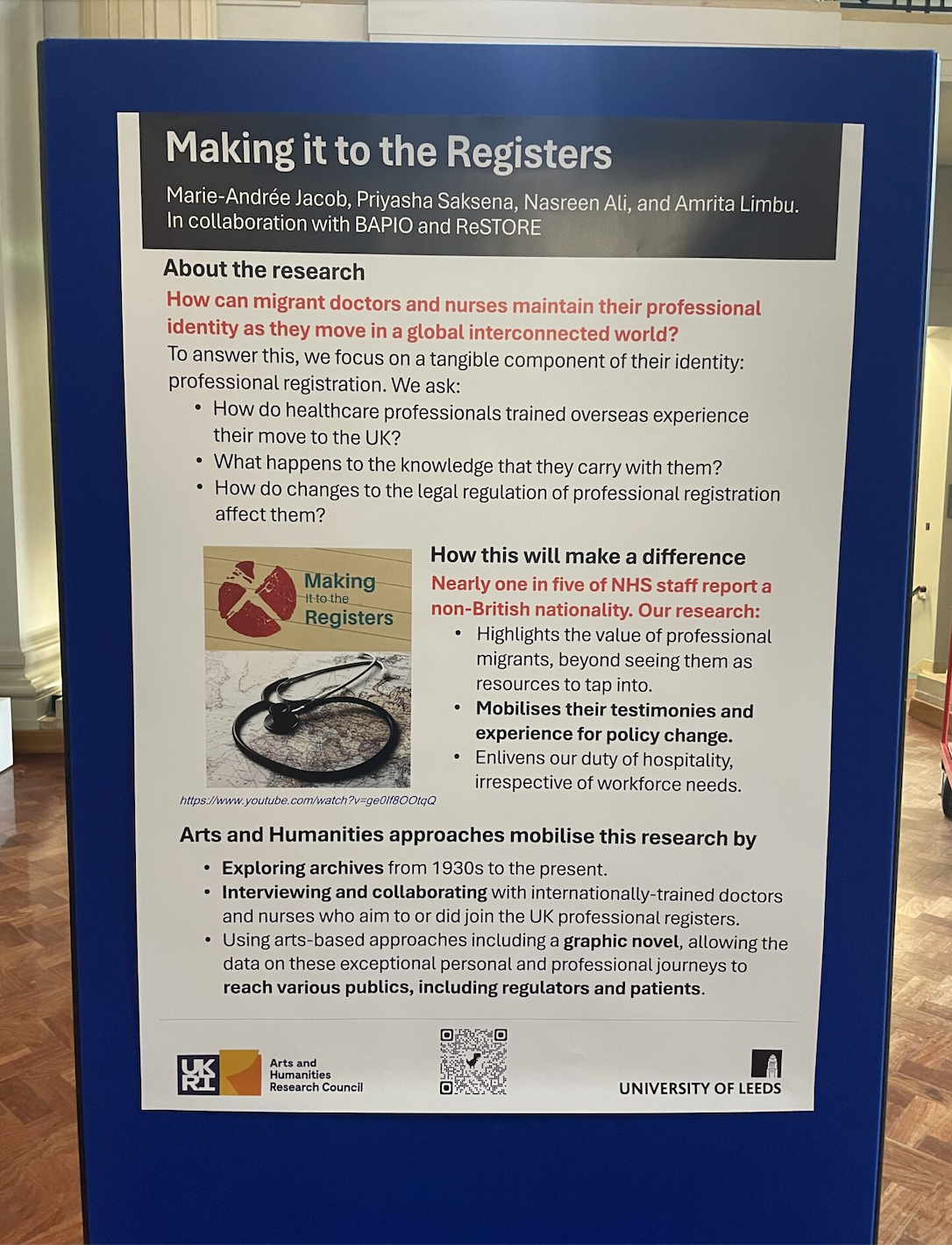
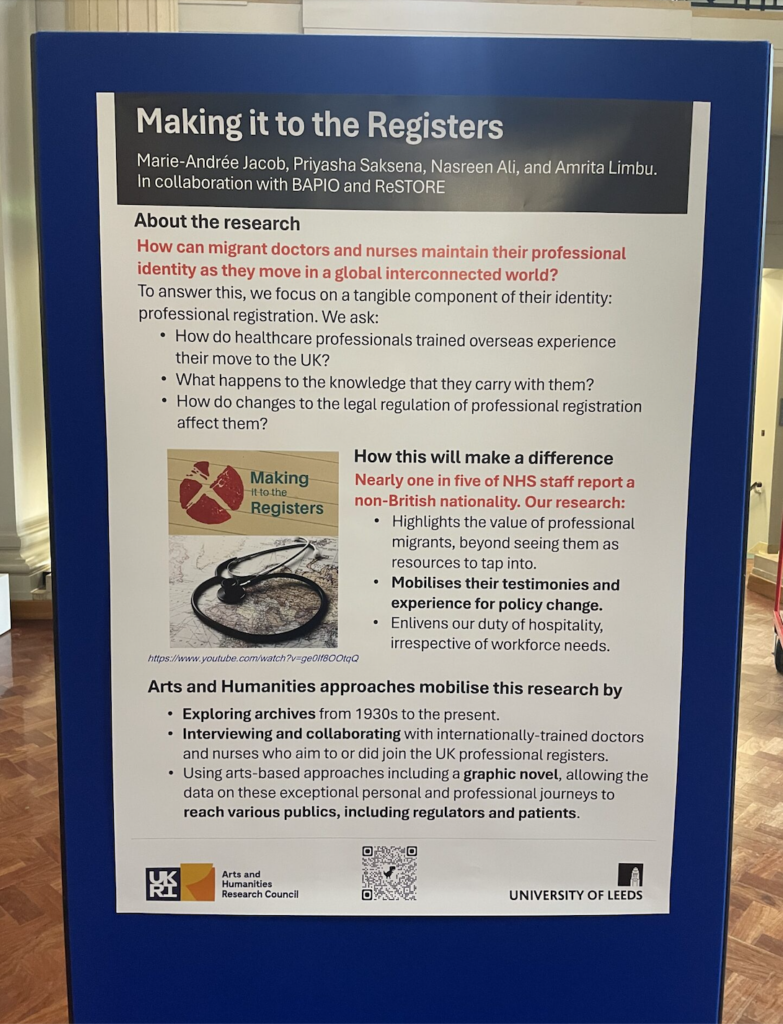
In our Arts and Humanities Research Council-funded project Making it to the Registers, many overseas-trained nurses and doctors we interviewed found the regulatory mechanism of fitness to practise overwhelming, even when they had not been referred. A doctor with primary qualification from India explained, “fitness to practise is a very scary term”, describing it as “anxiety-inducing”.[vi] Similarly, a nurse trained in Nigeria noted, “honestly, I don’t know how it works, and I hope I don’t get to find that out – where my fitness to practise would be questioned”. The professionals frequently expressed concerns about the fairness of the system, citing disparities in referrals and irregularities in decisions. They pointed to recent cases where minor issues led to severe outcomes, while more serious cases received lenient sanctions.
Beyond fairness, these concerns reflect broader issues that affect migrant professionals’ sense of safety and wellbeing. Investigations by regulatory bodies raise questions about whether practitioners are “fit” to practise, alongside questions on their competence and safety for the patients. Depending on the outcome, they may be cleared without sanction, issued a caution or conditions of practice, or, in more serious cases, face suspension or removal from the registers.[vii] But prior to the outcome, they endure a lengthy period of uncertainty and are often presumed guilty if a fitness to practise concern is raised.[viii] The process can take up to 2-3 years, during which some may face suspension or unemployment, leading to significant financial burden and distressing mental health effects, especially for those with families to support.
For migrant professionals, losing their jobs or falling below a specific income threshold can have implications on their and their dependents’ visa and immigration status, affecting their ability to remain in the UK. As migrants, many are constrained by immigration-related policies such as “No Recourse to Public Funds”, which restrict access to the welfare system for certain migrants, even in critical situations.[ix]
In addition to experiencing long-term trauma, stress and anxiety, studies also report that migrant professionals feel discriminated against by their employers during the process.[x] This often reflects a workplace culture of bullying and discrimination, where ethnicity and place of primary qualification can influence how employers handle cases.[xi]
In response to the insecurity caused by the fitness to practise mechanism, many healthcare professionals we interviewed maintain dual registration with their home country nursing or medical boards, as “backup” or “insurance” measures.[xii] This safeguard measure allows them to resume practice without undergoing a re-registration procedure, which can sometimes involve an examination, should they face a fitness to practise referral or need to return to their home country.
Our study’s focus on migrant healthcare professionals reveals their insecurity with the risk of referrals as well as the absence of mechanisms to ensure their safety as practitioners. Fitness to practise aim at patient safety − to ensure that the practitioner is safe for the patient. Doctors and nurses in our study acknowledged this but also highlighted critical gaps in their own safety. As a doctor trained in Pakistan stated, “when we talk about the word safety, we rarely ever think about our safety as healthcare professionals.”[xiii]
Regulatory focus on ensuring patient safety often overlooks the intertwined needs of the healthcare practitioners. While concerns about practitioners’ safety may seem beyond the regulators’ scope, a nurse trained in Greece rightly pointed out, “if you ignore your staff, we’re going to have no one to look after the patients.”[xiv] Patient safety and practitioners’ safety are interconnected issues, as our research participants emphasise, and patient safety cannot be achieved if professionals themselves do not feel safe and lack legal security.
Further, for many overseas-trained professionals joining the UK workforce, fitness to practise is often an unfamiliar regulatory system, with no experience with a similar mechanism in their previous workplace overseas. They must navigate not only a new country but also diverse cultures and workplace environment. Often, referrals arise from differing interpretations of cultural competence rather than clinical competence.[xv] With growing number of overseas healthcare professionals, regulators like the GMC and the NMC recognise the need to incorporate training and support for the non-UK trained professionals as part of their workforce planning and to maintain professional standards.[xvi] It is also crucial that their experiences with fitness to practise are prioritised in regulatory discussions to ensure both patient safety and practitioner wellbeing. Our study highlights how the fear of referrals creates an insecure environment for migrant healthcare professionals, who often lack confidence in their career stability, ability to remain in the UK, and most importantly, their safety as professionals. Ensuring the welfare of these professionals is crucial not only for their wellbeing but also for maintaining high standards of patient care.